Stoneware is tougher than you think
Our pieces are fired to 1,280 °C. At that temperature the clay partly turns to glass, which is why a Ledra cup rings when you tap it and doesn't soak up water. You don't need to treat it like your grandmother's porcelain.
The dishwasher, honestly
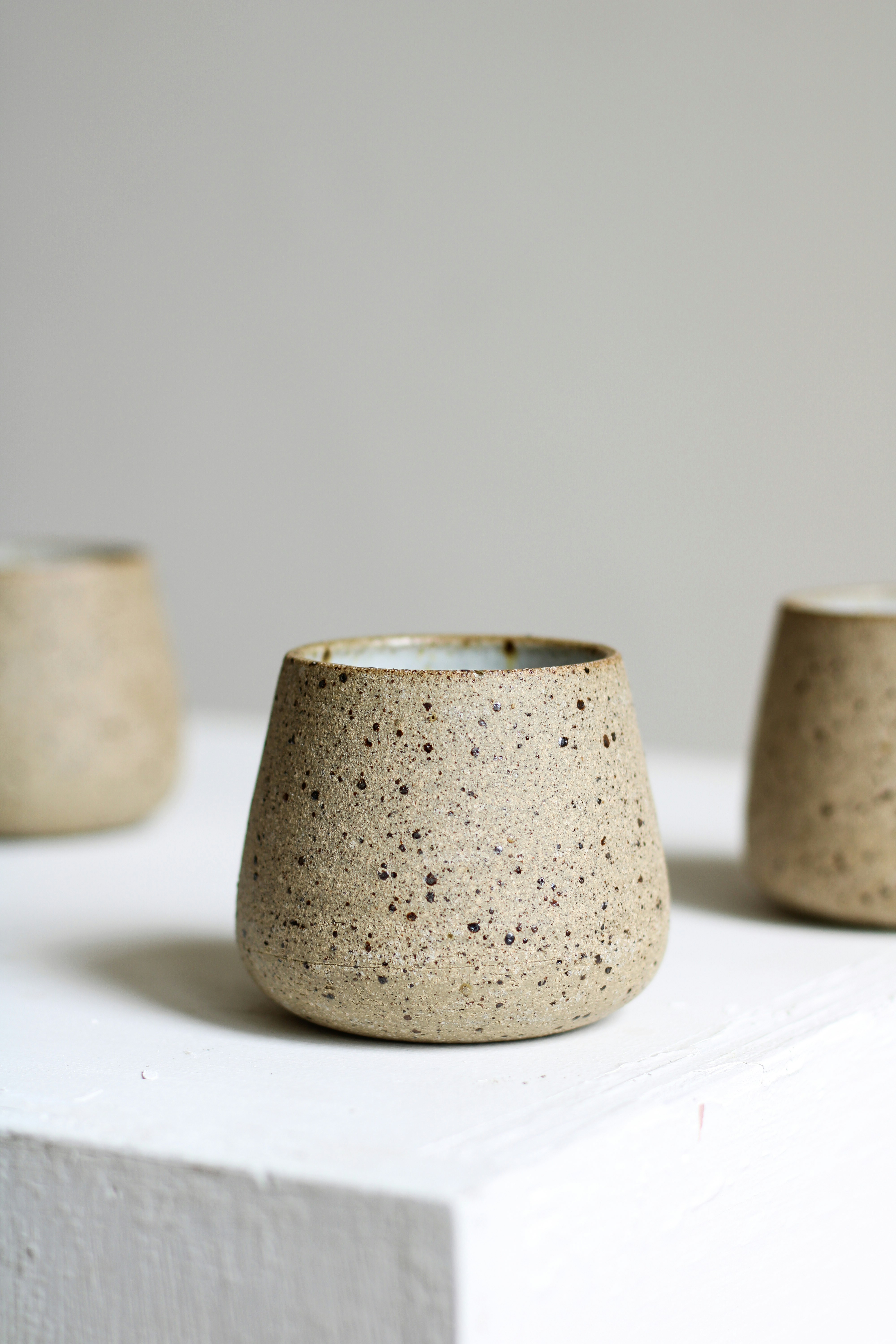
Every glazed piece we sell is dishwasher safe, and I've run test cups through ours more than four hundred times. What a dishwasher does over years is dull the surface very slightly, because the detergent is mildly abrasive. Matte glazes like Iron Speckle show it more than glossy ones. If you want your pieces to look exactly as they did on day one in ten years, hand wash. If you want to use them every day without thinking, use the machine. Both are fine.
The exception is raw terracotta. The outside of our Tall Vases isn't glazed, and detergent will bleach it. Rinse by hand.
Grey marks on plates
Knives and forks are harder than glaze. On matte plates they leave thin grey lines, which are metal from the cutlery, not damage to the plate. A paste of baking soda and water, or a mild powder cleanser, takes them off in a minute.
Heat
Microwave: yes. Oven: yes, up to 200 °C, but put the dish into a cold oven and let them warm up together. What cracks stoneware is shock: a cold dish into a hot oven, or a hot dish onto a wet stone counter.
Stains on the foot
The unglazed ring on the bottom of each piece can pick up coffee or tea. An old toothbrush and baking soda clears it.
When something chips
Small chips on the rim can be smoothed with fine wet sandpaper, around 400 grit. If a crack appears that you can feel with a fingernail, stop using the piece for hot drinks and send us a photo.